Why Solid Hardwood Floors Gap When Denver's Dry Air Hits
Solid hardwood floors gap in Denver more than most homeowners expect, and it happens almost like clockwork every year right around the time the furnace kicks on for the season. Small gaps appear between boards, sometimes wide enough to catch a fingernail, and it looks alarming even though it is one of the most predictable things that happens to solid hardwood in a climate like ours. At James LoBello Hardwoods, I get calls about this every winter, and it is almost never a sign that anything actually went wrong.
Colorado's dry winter air pulls moisture out of everything in a house, wood flooring included, and that moisture loss is what causes the wood to contract. It happens every year along the Front Range, and it happens whether the floor was installed last month or ten years ago. Understanding why it happens, and what separates a floor that handles it well from one that does not, makes those gaps a lot less worrying and a lot easier to prevent.
What I Cover:
1. Why Denver's dry air causes hardwood to contract
2. Is gapping in hardwood floors normal in the winter
3. Why DIY fixes for gapping often make things worse
4. What actually prevents excessive gapping long term
Why Denver's Dry Air Causes Hardwood to Contract
Solid hardwood is a natural material, and it responds to the moisture level in the air around it by expanding and contracting. When humidity drops, which happens fast once the heating season starts along Colorado's Front Range, the wood gives up moisture and the individual boards shrink slightly in width. Multiply that shrinkage across a whole room and the tiny gaps between boards become visible.
A quick tip to remember: a small, uniform gap that opens in winter and closes again by late spring is the wood behaving exactly as it should, not a sign of a bad installation.
Is Gapping in Hardwood Floors Normal in the Winter?
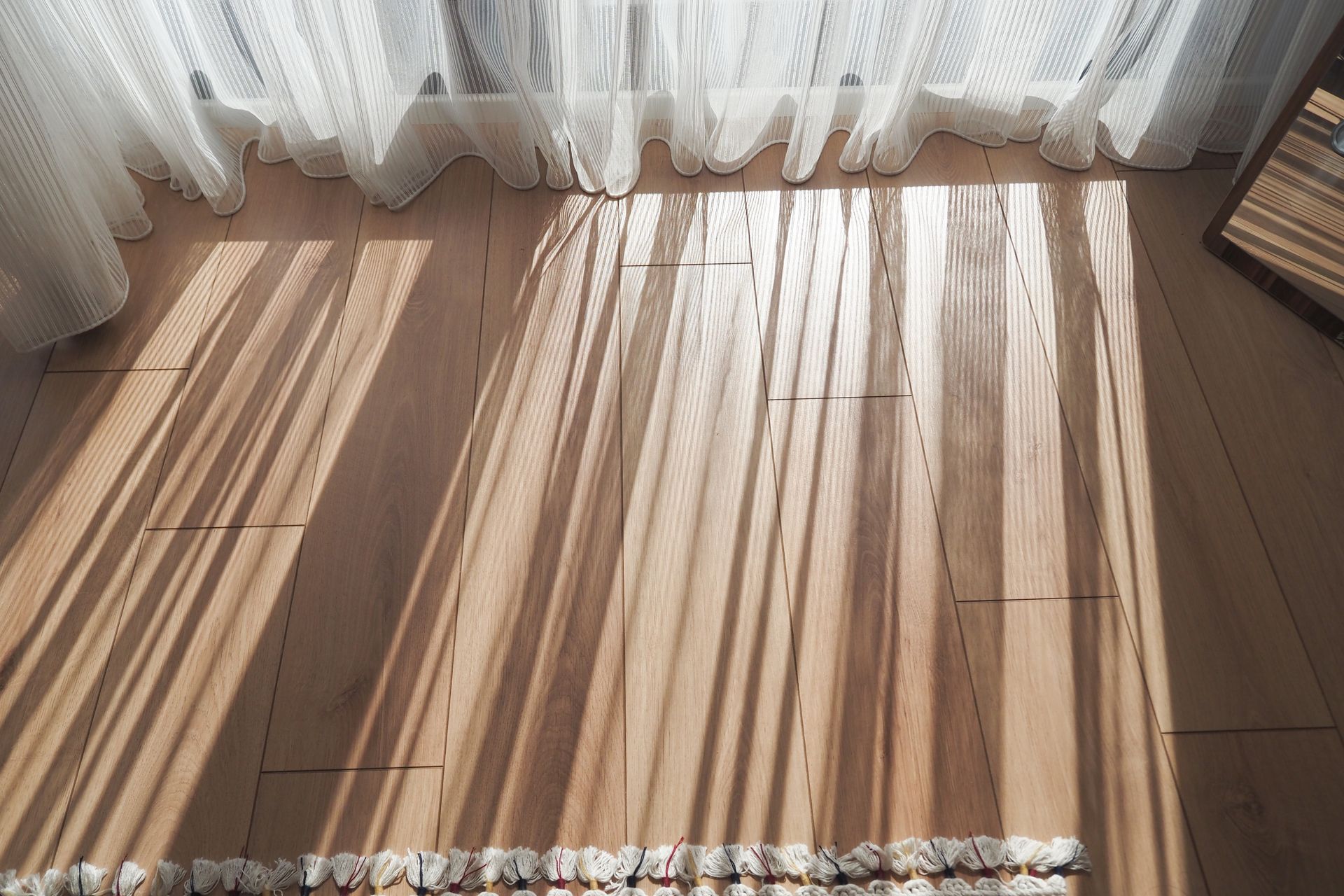
Yes, in most cases, some seasonal gapping is completely normal for solid hardwood in a dry climate like Denver's. What matters is the pattern. Gaps that are consistent from board to board, that show up only during the driest months, and that close back up as humidity returns in spring are typical seasonal movement. Gaps that are uneven, that appear in only one section of a room, or that stay open year-round point to something else, usually related to how the floor was acclimated or installed in the first place.
Why DIY Fixes for Gapping Often Make Things Worse
It is tempting to fill gaps with wood filler or caulk the moment they show up, but doing that on a floor that is still actively contracting can cause real problems. Once spring humidity returns and the boards expand again, filled gaps have nowhere to go, and that pressure can cause cupping, buckling, or filler popping back out in chunks. A gap that closes on its own every spring does not need to be filled at all.
A quick tip to remember: running a humidifier during the driest months does more to stabilize a hardwood floor than any filler or sealant applied after the fact.
What Actually Prevents Excessive Gapping Long Term
The real prevention happens before the floor is ever installed. I acclimate solid hardwood on site for long enough that it reaches equilibrium with the home's actual humidity levels before a single board goes down, rather than installing it straight off the truck. I also check the subfloor moisture level itself, since a slab or subfloor that is holding more moisture than expected changes how the wood behaves once it is in place. Skipping that step is one of the most common reasons gapping turns out worse than it should.
Getting Ahead of Next Winter's Gapping
None of this means solid hardwood is the wrong choice for a Denver home, it just means the installation needs to account for how dry the air gets here. If the gaps in your floor seem larger than what your neighbors are dealing with, or if they are not closing back up once spring arrives, it is worth having someone look at the acclimation and subfloor conditions rather than assuming the wood itself is the problem. Reach out and I will tell you plainly whether what you are seeing is normal seasonal movement or something that needs attention.
Share This Blog