What Changes When Your Installer Is Also the Owner: 5 Things Homeowners Notice
There is no dispatcher, no rotating install crew, and no separate sales rep involved with James LoBello Hardwoods. Every estimate, install, and follow-up call goes through the same person. Without a layer of staff between the estimate and the work, several practical things shift for the better.
Some of these differences only become obvious once a project is already underway, which is usually too late to plan around them. Knowing what to expect ahead of time, especially for an engineered hardwood project where subfloor conditions can shift the plan mid-job, makes it easier to compare an owner-operator setup to a larger outfit before you sign anything.
What I Cover:
- Tip #1: One Person Handles Estimate Through Final Walkthrough
- Tip #2: The Person Measuring Is the Person Installing
- Tip #3: Scheduling Runs on One Calendar
- Tip #4: Mid-Project Issues Do Not Need to Be Relayed Twice
- Tip #5: Lower Overhead Tends to Show Up in the Quote
- Frequently Asked Questions
Tip #1: One Person Handles Estimate Through Final Walkthrough
Homeowners in places like Highlands Ranch often deal with a sales rep for the quote, a coordinator for scheduling, and a different crew for the actual install. With me, the same person who walks your home and gives you a number is the one holding a nail gun or a trowel three weeks later.
● Continuity: Details mentioned once during the estimate, like a tricky transition at a doorway or a request to save leftover material, stay with the same person the whole way through.
Tip #2: The Person Measuring Is the Person Installing
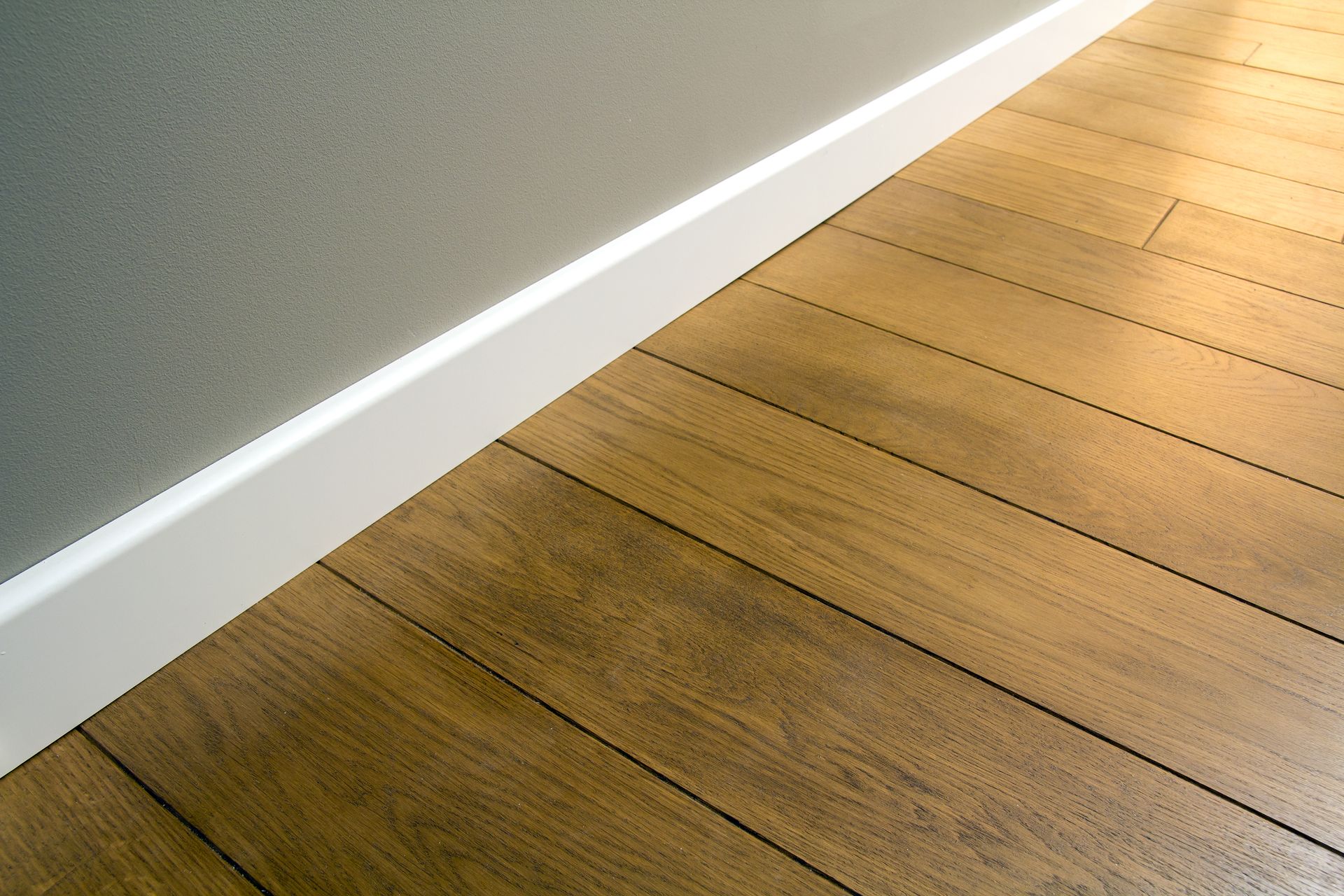
This matters more than people realize. Measurements for material orders need to account for board direction and expected waste from cuts, and whoever installs the floor has to live with any measuring shortcuts. That same attention carries into the actual install. On pre-finished flooring, I open every box before laying boards and blend the material together so the same grain or color pattern never ends up next to itself in the finished floor.
● Trade Insight: I order slightly more material than the bare minimum because I know where the tricky cuts will fall before I open a box, something a separate estimator working from a floor plan alone cannot predict as reliably.
● Extra Step: Racking boards from multiple boxes before installing is a standard best practice, but it is exactly the kind of extra step that gets skipped when someone is rushing through the job.
Tip #3: Scheduling Runs on One Calendar
There is no juggling between a sales calendar and a separate install calendar. The date I give you during the estimate is the date I am planning around, and if something needs to shift, you are talking to the person actually doing the work rather than relaying a message through someone else.
● Continuity: One phone number and one person to reach for scheduling changes, instead of a call center routing you to whoever picks up.
Tip #4: Mid-Project Issues Do Not Need to Be Relayed Twice
Engineered hardwood installs sometimes turn up a subfloor issue once old flooring comes up, something not visible during the estimate. When that happens, I am the one who can look at it and make a call on the spot.
● Trade Insight: A subfloor that reads fine visually can still be out of level by more than what engineered hardwood tolerates well, and catching that during demolition rather than after installation saves real time and material.
Tip #5: Lower Overhead Tends to Show Up in the Quote
Running a one-person operation means no office staff and no layer of management between the work and the price. That overhead has to get paid for somehow in a larger company, and it usually shows up somewhere in the estimate.
● Continuity: A quote built from actual project cost rather than a rate card padded to cover salaries that a solo operation does not carry.
Frequently Asked Questions
Does hiring an owner-operator installer cost more or less than a larger company?
Typically less, mainly because there is less overhead built into the price. Labor and administrative costs tend to be lower without office staff and project managers involved.
Will scheduling take longer since there is only one installer?
Not usually. A single install crew is not competing with other crews for the same days, so once a date is set, it tends to hold. Booking further ahead in busy seasons matters more than with a company juggling multiple crews.
What happens if the project runs into an unexpected issue mid-installation?
Whoever finds the issue can address it immediately, without waiting on approval from someone else. That means faster decisions and fewer delays compared to a job requiring sign-off from a project manager who is not on-site.
Deciding What Matters Most for Your Project
Continuity from estimate to final walkthrough is not the right fit for every homeowner, but for a lot of engineered hardwood projects, it solves problems before they start. If one point of contact through the whole process sounds like it would help rather than complicate things, bring that up when comparing installers. I am glad to walk through how my process works before you decide.
Share This Blog